

Feng Shui Bedroom Layout for Better Rest

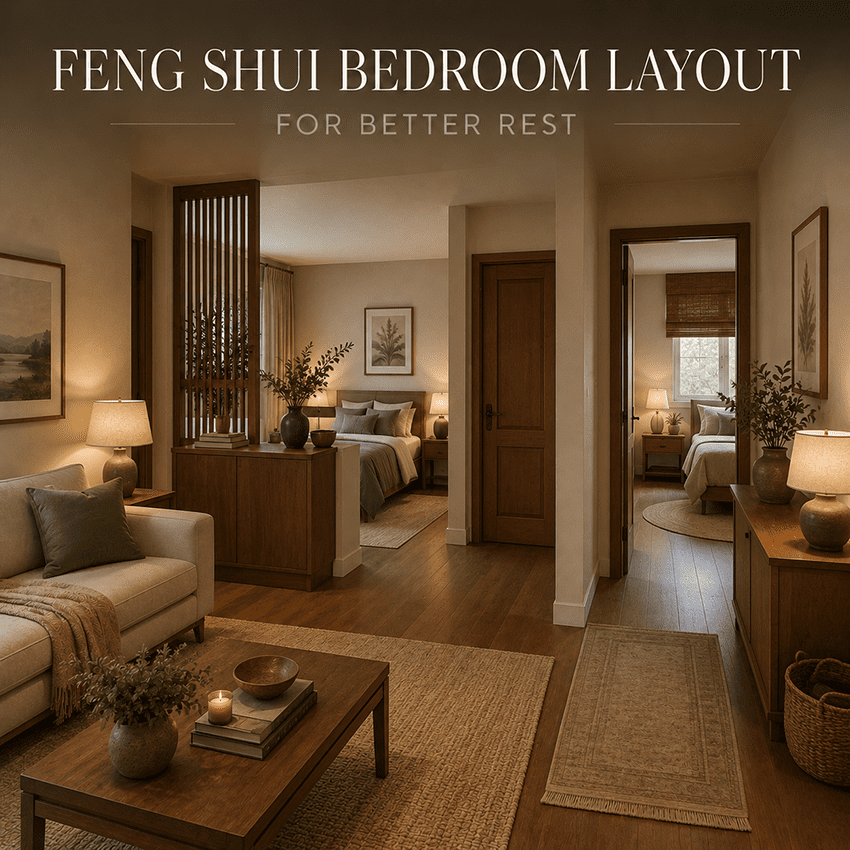
A bedroom carries a different kind of weight from the rest of the home. It is where you end the day, lower your guard, and return to your body after work, screens, noise, and decisions.
In feng shui, the bedroom is often treated as one of the most important rooms because it relates to rest, privacy, and personal renewal. For a modern Western home, you do not need to approach this with fear or rigid rules. A good feng shui bedroom layout is mostly about making the room feel calmer, easier to use, and less mentally busy.
The goal is not to create a perfect bedroom. The goal is to notice what helps the space feel settled.
Start With the Bed
The bed is the anchor of the room, so begin there before changing decor, colors, or symbolic objects.
Many feng shui traditions prefer a bed position where you can see the bedroom door while lying down, without being directly in line with the door. This is sometimes called a command position. In plain language, it means the bed feels aware of the room without feeling exposed.
If your room is small, rented, or awkwardly shaped, do not force a layout that makes daily life harder.
Keep Both Sides of the Bed Usable
If space allows, leave room on both sides of the bed. This can make the room feel more balanced and less crowded.
Two nightstands are not required, but some sense of balance helps. You might use matching lamps, similar visual weight, or a small shelf on one side if the room is tight. The point is not symmetry for its own sake. The point is to make the bed feel supported rather than squeezed into a corner.
Reduce What the Bed Faces
Before adding anything, look at what you see from the bed.
If the first view is laundry, work papers, exercise equipment, storage boxes, or a bright screen, the room may feel active even when you are trying to rest. It simply gives you a practical place to start.
Move the most distracting items first. Keep the surface across from the bed simple. If you need storage in the bedroom, use closed storage where possible so the room does not visually remind you of unfinished tasks.
Use Mirrors With Care
Mirrors can make a bedroom feel brighter and larger, but they can also add visual movement.
For beginners, the best question is: what does the mirror reflect when you are in bed? If it reflects soft light, a calm wall, or a pleasant part of the room, it may be fine. If it reflects clutter, a busy doorway, or the bed in a way that keeps catching your eye, it may make the room feel less restful.
You do not need to remove every bedroom mirror. Try adjusting the angle, moving it away from the bed view, or using it inside a closet door if that suits your space.
Soften Light and Edges
Bedroom feng shui is not only about furniture placement. Light matters too.
Harsh overhead lighting can make a bedroom feel practical but not restful. Softer bedside lighting, warm bulbs, curtains that manage glare, and a simple evening light routine can change the mood quickly.
Also notice sharp visual edges near the bed. A crowded shelf, pointed corner, or tall stack beside your head may make the space feel busy. You do not need to turn the room into a blank hotel room. Just remove the things that feel visually loud.
What Bedroom Feng Shui Does Not Mean
A feng shui bedroom layout should not make you afraid of your room. If advice online makes you panic about your bed, mirror, window, or door, pause and return to the basics.
Ask whether the change makes the bedroom cleaner, calmer, easier to move through, and more supportive of rest. That question is more useful than trying to follow every rule at once.
Traditional feng shui can offer meaningful symbolic language, but rentals, shared homes, small apartments, and unusual floor plans all require practical judgment.
When a Personalized Bedroom Review Helps
General tips can help you begin, but a real bedroom has measurements, doors, windows, storage, lighting, and personal habits.
A personalized Home Feng Shui Consultation can help you review bed placement, mirror position, clutter pressure, lighting, and room flow in context. It should not promise a specific life result. It should give you clearer options for making the bedroom feel more settled and easier to live with.
FAQ
What is the best feng shui bedroom layout?
A common starting point is to place the bed where you can see the door without being directly lined up with it, while keeping enough space to move comfortably around the room.
Is it bad to have a mirror in the bedroom?
Not always. The main issue is what the mirror reflects. If it reflects clutter, movement, or the bed in a distracting way, consider moving or adjusting it.
What should I remove from my bedroom first?
Start with visible clutter, work papers, storage boxes, harsh lighting, and anything that reminds you of unfinished tasks when you are trying to rest.
Can feng shui work in a small bedroom?
Yes. In a small room, clear pathways, softer lighting, practical storage, and a less crowded bed area can matter more than following every traditional layout rule.
Do I need special feng shui objects for better rest?
No. Begin with bed placement, clutter, lighting, and room flow. Objects can be added later if they feel meaningful, but they are not the foundation.
If you want help applying these ideas to your own bedroom, a personalized Home Feng Shui Consultation can give you a calmer way to review your layout.
CTA: Book a Home Feng Shui Consultation